Get notified by email when this case is updated.
Written by: A. Smith
Published July 14, 2025 @ 7:01 AM ET
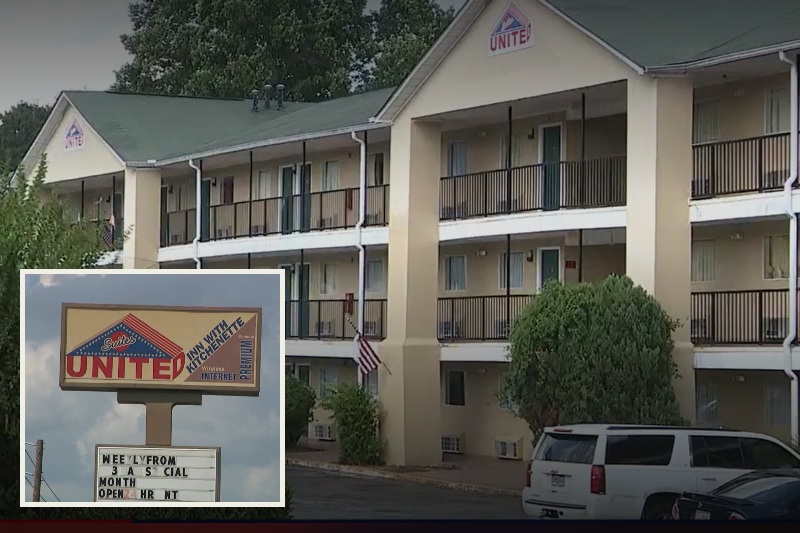
DEKALB COUNTY, Ga. – A federal jury in Atlanta has awarded $40 million in damages to a child sex trafficking survivor who was repeatedly exploited at a Decatur hotel while staff failed to intervene despite clear warning signs.
The verdict was handed down late Friday after just a few hours of deliberation. Jurors found that Northbrook Industries, Inc., which operates United Inn & Suites on Memorial Drive, knowingly profited from the trafficking and failed to take action to stop it.
The plaintiff, identified in court documents as J.G., filed the civil lawsuit in 2020. She said she was trafficked at the hotel over a 40-day period between 2018 and 2019, when she was just 16 years old. Now an adult, J.G. testified that she was forced to engage in sex acts with at least 12 men a day while being held in a room at the hotel.
Jurors awarded her $10 million in compensatory damages and $30 million in punitive damages under the federal Trafficking Victims Protection Reauthorization Act, which allows survivors to sue not just traffickers but also businesses that knowingly benefit from trafficking activity.
“She was trafficked out of the United Inn & Suites off Memorial Drive in DeKalb County,” said Emma Hetherington, director of the Wilbanks Child Endangerment and Sexual Exploitation Clinic at the University of Georgia School of Law. “The claims here under the TVPRA are essentially that the hotel knowingly benefited financially from being in business with the traffickers.”
Hetherington said this is the first civil case brought under the TVPRA to reach a jury verdict anywhere in the country.
“Most of these cases have either settled before it’s gotten to a jury or have been dismissed,” she said. “This shows survivors that you can be successful in these claims.”
J.G. also filed claims under Georgia negligence law, alleging the hotel failed to provide a safe environment or respond to multiple red flags. During the trial, attorneys presented evidence that the hotel received a BOLO or a “be on the lookout” alert from law enforcement identifying J.G. as a missing child from Rockdale County. The notice included her name, age, and photo. At the time the alert was received, J.G. had already been at the hotel for 22 days, according to her legal team.
Despite this, attorneys said staff made no effort to check on her welfare.
“This sort of activity is very hard to miss,” Hetherington said. “Housekeepers were changing sheets multiple times a day, seeing lots of condoms, and there were multiple police incident reports. This was not just a rented room; this was turning a blind eye.”
A DeKalb County vice detective testified that the hotel was considered one of the top five commercial sex trafficking hotspots in the county at the time.
Defense attorneys denied wrongdoing and claimed the hotel did not knowingly participate in or benefit from trafficking. They also argued that J.G. had the opportunity to leave.
“Whether a trafficking survivor or victim is 16 or whether they’re 40 years old, there is a very intense element of control that traffickers have over their victims,” Hetherington said. She likened the emotional manipulation to Stockholm Syndrome and explained that traffickers often exploit basic needs like food, shelter, and attention.
On the stand, J.G. described growing up in poverty, being in and out of foster care, and lacking parental support. She testified about the trauma she endured, including physical abuse by traffickers and long-lasting psychological effects.
“She described being triggered, having nightmares, flashbacks, difficulty trusting people, and how it impacts her relationships, education, and health,” Hetherington said. “Even though it may have only been 40 days of trafficking, she will endure a lifetime of trauma.”
Her attorney, Patrick McDonough, said hotel staff interacted with J.G. during her stay and never questioned her presence, even as dozens of men cycled through her room each day.
“You’ve got to train your staff that you don’t sell condoms to 16-year-olds when they come up to the front desk,” McDonough said. “You need to verify, does this look right, that there’s kids in this room by themselves and 20 men have gone in and out every 30 minutes?”
McDonough said the verdict is a victory not just for J.G., but for other trafficking survivors seeking justice.
“It is a victory for our client, and I’m really happy for her, and it’s going to change her life,” he said. “And really, there’s nobody I know more deserving than someone who’s been through this.”
He said most survivors pursue civil cases not for financial gain, but to be heard.
“Most survivors say their top reason is justice, healing, holding wrongdoers accountable,” Hetherington said. “To be heard by a jury who says, ‘We believe you,’ is huge.”
While the decision does not establish legal precedent nationwide, legal experts say it could influence how other cases are handled, pushing more settlements or encouraging survivors to take their cases to court.
“This puts hotels on notice that they can and will be held responsible when they ignore the obvious,” Hetherington said. “There’s a reason traffickers chose that hotel. It’s because they knew they wouldn’t be bothered. That has to change.”