Get notified by email when this case is updated.
Written by: E. George
Published November 6, 2024 @ 2:20 PM ET
FULTON COUNTY, Ga. – In a year when politics and pop culture have been increasingly intertwined, rappers stepped into the political arena in ways that might surprise even the most ardent fans. From surprise performances at high-profile events to public endorsements, Atlanta-based hip-hop artists wielded influence in the 2024 presidential race.
While Lil Jon’s unexpected appearance at the Democratic National Convention (DNC) was one of the most prominent examples, it reflects a broader trend of rappers using their platforms to align with political campaigns and engage with voters.
Lil Jon’s performance at the August DNC in Chicago caught many by surprise, but for Atlanta residents and hip-hop fans, it was a reminder of the deep connection between rap and political influence in the city. During the ceremonial roll call to nominate Kamala Harris as the 2024 Democratic presidential candidate, Lil Jon stepped up to the microphone, transforming the moment into an impromptu mini-concert.
“Ladies and gentlemen, we are here tonight to officially nominate Kamala Harris for president,” he said, adding a dose of showmanship to what might have been a rather dry political ritual. His appearance added an element of excitement and cultural relevance to the proceedings, highlighting the growing role of rappers in political discourse.
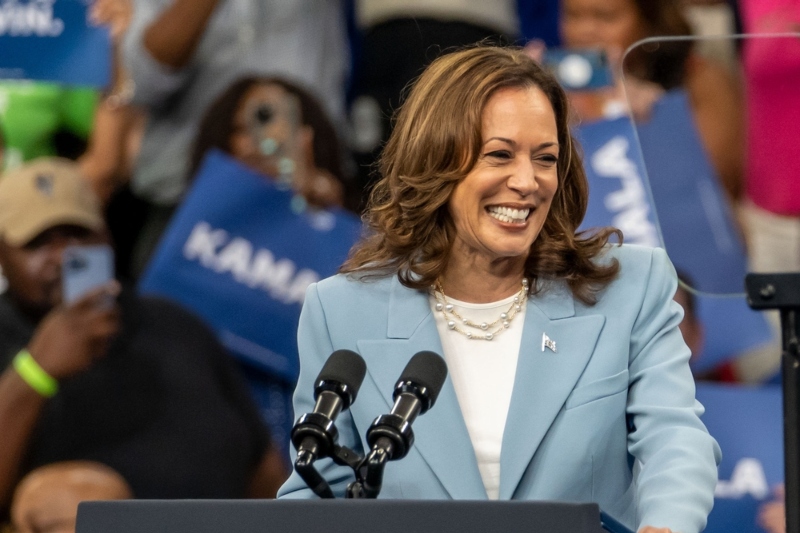
Throughout the year, several high-profile Atlanta rappers have actively participated in events and rallies supporting Vice President Harris’ 2024 candidacy. Megan Thee Stallion and Atlanta’s own Quavo joined Harris at a rally in July at Georgia State University’s Convocation Center, marking the vice president’s first local appearance since announcing her presidential bid. For many, these moments symbolize how hip-hop artists are shaping the political landscape—both in their hometown of Atlanta and nationwide.
This collaboration between rappers and politicians is not a new phenomenon. It taps into a longstanding tradition in Atlanta, which is known as both a civil rights hub and a mecca for hip-hop culture. The overlap between rap music and politics has long been present in the city, where music and social justice activism have often gone hand in hand.
Andra Gillespie, an associate professor of political science at Emory University, suggests that rapper endorsements play a strategic role in political campaigns. She points out that such endorsements can enhance a candidate’s branding, particularly if the rapper has a loyal fan base.
“When you have people who have a certain level of currency, candidates want to have some of the sparkle of that brand shine on them,” Gillespie explains. The hope is that if voters respect a particular artist, they might be inclined to support the politician the artist endorses.
However, Gillespie also notes that while these endorsements help with a candidate’s image, it is difficult to definitively measure their impact on voter turnout. Celebrity support can raise awareness but does not always translate into votes.
While a myriad of Atlanta rappers have aligned with the Democratic Party, two have supported former President Donald Trump, reflecting the broader political divide within the hip-hop community. Notable local figures like Waka Flocka Flame and Money Man have shown vocal support for Trump in the lead-up to the 2024 election.
In July, Waka Flocka Flame stirred controversy by publicly telling Biden supporters to leave one of his concerts, doubling down on his admiration for Trump. “Trump [is] still my president. I don’t have to stand with a red hat or dance [on] stage for money in my pockets,” Waka wrote on social media. For these artists, their support for Trump is not just a political stance—it’s part of their broader identity as outspoken individuals in the music and cultural scenes.
According to Corey Miles, an assistant professor at Tulane University, the growing involvement of rappers in political campaigns is part of an effort by politicians to tap into the cultural capital of hip-hop. “Hip-hop functions as almost a proxy for Blackness,” says Miles. For politicians who want to connect with Black voters, hip-hop offers an immediate cultural relevance that can be difficult to attain through traditional political channels.
This is particularly important in states like Georgia, where Black voters represent a critical demographic, especially in swing elections. The challenge for candidates like Harris and Trump is to ensure they are not just connecting with voters in terms of identity but also motivating them to turn out at the polls.
Despite the growing trend of celebrity endorsements in politics, there remains a debate about their actual effectiveness. According to a report from the Harvard University Ash Center for Democratic Governance, while celebrity-driven calls-to-action can boost voter registration, it is much more difficult to quantify their influence in terms of voter turnout.
A recent study by Vote.org showed a massive increase in voter registrations after pop star Taylor Swift encouraged her followers to register on Instagram—demonstrating that celebrity endorsements can drive engagement, particularly among younger generations.
However, as Gillespie points out, motivating people to vote is one thing, but getting them to the polls is another. She explains, “There isn’t a lot of evidence necessarily to suggest that a celebrity endorsement persuades people to vote for a particular candidate.” In other words, while rapper endorsements may raise awareness and energize certain voter segments, they do not guarantee that those individuals will follow through with casting their votes.
Atlanta’s rap community has long been intertwined with political activism, particularly within the Democratic Party. In 2008, Jeezy’s anthem “My President Is Black” became a rallying cry for Barack Obama’s historic presidential run.
More recently, rappers like Latto and BRS Kash have used their music to encourage voter participation. In 2020, BRS Kash transformed his song “Throat Baby” into “Vote Baby” as part of a campaign to support Georgia Democratic candidates Jon Ossoff and Raphael Warnock.
Additionally, Jermaine Dupri, a staple in the Atlanta music scene, has been an outspoken advocate for getting out the vote. At a “Brothas and Brews” event earlier this year, Dupri encouraged Black men to support Harris. “If you live in this city, you love the way this city moves, it’s no way possible you should be voting for the other side,” he said, alluding to Atlanta’s history of Black political leadership.
The involvement of rappers in the 2024 presidential race highlights the growing intersection of entertainment and politics, particularly in cities like Atlanta, where hip-hop culture is a major influence. While the exact impact of celebrity endorsements on voter behavior remains unclear, it is undeniable that these moments of cultural crossover are reshaping the way political campaigns engage with younger and more diverse audiences.
As the election season closes, one thing is clear: rappers are no longer just entertainers. They are active participants in the political conversation, using their platforms to influence public opinion and possibly sway the outcome of an election. Whether or not these endorsements lead to concrete political outcomes remains to be seen, but for now, hip-hop’s role in shaping the 2024 race is an undeniable force to be reckoned with.